In today’s age of technology, the benefit of large screens has taken center stage at events of all kinds. From Edgar Vasquez Audiovisual Services we will explore in detail what a giant LED screen is, how it works and how to choose the right one for your event.
From concerts and sporting events to trade shows and corporate presentations, these impressive screens capture the attention of audiences in spectacular fashion.
What is a Giant LED Screen?
A giant LED screen is a visual system composed of an array of light-emitting diodes (LEDs) that are joined together to form a striking display surface. These screens are known for their brightness, clarity and ability to display vibrant multimedia content on a large scale. They are used in a variety of environments, from concerts and sporting events to shopping malls and exhibitions, offering an immersive visual experience.
What types of Giant LED screens are there?
Indoor LED displays:
Indoor LED screens are designed for use in enclosed environments where control over ambient lighting is greater. They are widely used in places such as shopping malls, auditoriums, conference rooms, television studios, retail stores and more. These screens offer superior image quality and clear viewing even at short distances.
Outdoor LED displays:
Outdoor LED screens are designed to withstand changing weather conditions and be visible in outdoor environments where sunlight and other light sources can affect visibility. They are used in applications such as digital billboards, stadiums, outdoor concerts, trade shows and sporting events. These screens are built to be weather resistant and offer high brightness to overcome outdoor lighting conditions.
What models of LED screens are available?
Since television was invented in 1924 the vast majority of viewers have been accustomed to seeing screens as a flat surface, however in recent years major manufacturers have surprised us with new designs:
Curved screens:
Curved LED screens are an exciting innovation in display technology. Instead of having a flat surface, these screens are designed with a curvature that allows them to conform to specific shapes or create an immersive viewing experience.
Transparent Screens:
Transparent LED screens are an innovation that combines display technology with transparency. These screens allow light and vision to pass through them, making them ideal for applications where you want to combine digital content with the real environment.
Flexible screens:
Flexible LED screens offer a new dimension of versatility by being able to bend or roll up as needed. This makes them ideal for applications where screen shape adaptability is required.
What are the applications and uses of giant LED screens?
1. LED displays for permanent installation:
LED screens for fixed installation are characterized by being mounted in a specific location for an extended period of time. They are designed to provide a permanent screen solution in a given environment. They are generally used in stadiums, shopping malls, store windows and building facades.
2. LED screens for events:
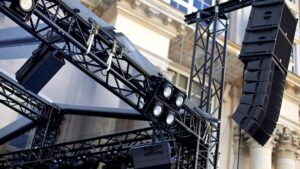
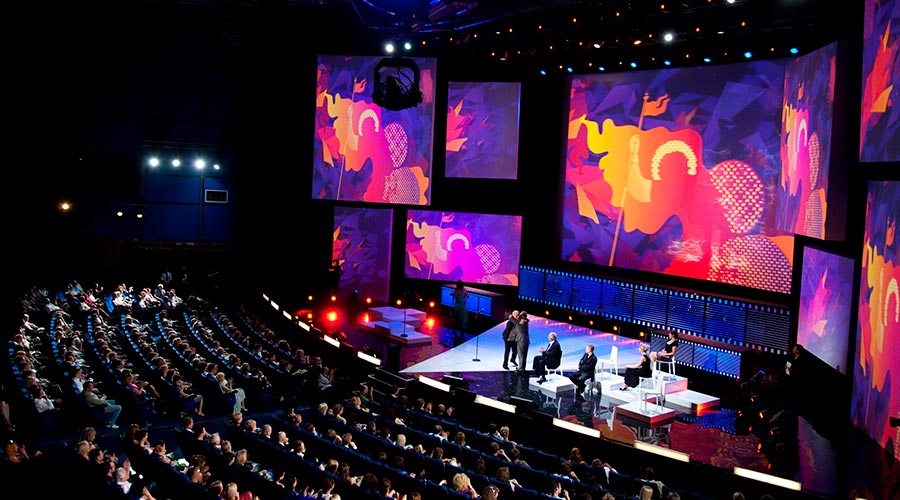
LED screens for events are designed to be set up and taken down quickly and efficiently, making them an ideal solution for temporary use in a wide variety of productions.
Opt for a LED screen rental for events is especially practical when you need visual impact without complications: they are perfect for concerts, fairs and large corporate events, where installation time, reliability and visibility make the difference.
How does a giant LED screen work?
1. Light-Emitting Diodes (LEDs):
These small devices are the fundamental component of giant LED screens, and when an electric current passes through them, they emit light in different colors (red, green, blue).
In an LED panel or display, they are arranged in specific patterns to create the overall image and are combined into groups called pixels to produce a wide range of colors and shades.
LED array:
LEDs are arranged in a matrix with a regular pattern of rows and columns. Each intersection of a row and a column represents a pixel. The denser the LED matrix, the higher the screen resolution and image quality.
Pixels are the fundamental building blocks of an image on an LED screen. By adjusting the brightness of the LEDs in each pixel, it is possible to produce different colors and brightness levels.
3. Electronic Control:
The electronic control is crucial to manage and synchronize the light emission of the LEDs on the screen. Integrated circuits and drivers are used Integrated circuits and drivers to the individual LEDs and adjust their brightness as required. These drivers can process video data and input signals, and then distribute the appropriate commands to the corresponding LEDs in the matrix.
4. Assembly and configuration:
Installing an LED display involves assembling multiple modules or panels that contain interconnected LED arrays. These modules are assembled to form the complete display, along with a structure to support and protect the LED panels.
Next, the display settings include color and brightness calibration, color spot correction, and pixel alignment to ensure a consistent and accurate image.
What is needed to be able to project with an LED screen?
1. Video playback source:
A video playback source is essential to provide content to the LED screen. It can be a computer, media player, game console, Blu-ray player or other device capable of sending video signals. This source sends content, such as videos, images or presentations, to the LED screen for viewing.
2. Video control source:
Video control is crucial for managing multiple video sources and routing them to the LED screen. Typically, at large events and major installations, a video mixer or switcher is used to switch between different video sources in real time. This allows content from various sources—such as live cameras, presentations, and pre-recorded videos— to be displayed on the LED screen.
The switcher provides control over the smooth transition between sources and screen composition to create cohesive visual presentations.
3. Processor or LED scaler:
An LED processor or LED scaler is a device that is responsible for adjusting the resolution and format of the content to match the resolution of the LED screen. This is crucial because LED screens have a fixed resolution and the source content may have a different resolution. The processor converts the content to be displayed correctly on the LED screen without distortion or loss of quality.
Main features of a Giant LED screen
Pitch or Resolution:
Pitch, also known as resolution, refers to the distance between the centers of two adjacent pixels on the LED screen. A smaller pitch indicates a higher pixel density and, therefore, a higher resolution.
A smaller pitch screen can show finer details and sharper image quality, making it ideal for close viewing applications.
Nits or Brightness:
Nits are a measure of brightness in LED screens. The more nits a screen has, the brighter its light output. A high level of brightness is essential for screens exposed to sunlight or brightly lit environments such as stadiums and trade fairs. Proper brightness ensures optimal visibility and vibrant colors in various lighting conditions.
3. Sampling frequency:
The refresh rate refers to the speed at which the LED screen updates its content. It is measured in hertz (Hz) and is related to the smoothness of moving images. A higher refresh rate results in smoother playback of videos and animations, preventing the “flickering” effect on the screen.
4. Viewing angles:
The viewing angle indicates how widely the screen can be viewed from the sides and from above and below without degradation of image quality. A wide viewing angle ensures that content is visible from multiple viewpoints, which is crucial for screens at events and venues with a dispersed audience.
5. Energy consumption:
Power consumption is the amount of electricity the LED screen uses to operate. Energy-efficient screens are beneficial both for reducing costs and minimizing environmental impact. Energy efficiency may vary depending on the LED technology used and the brightness required.
6. Module size:
Module size refers to the physical size of each panel or module that makes up the LED screen. A larger module size may make assembly easier, but may result in a lower resolution if the same screen area is divided into fewer pixels. The size of the module also affects the ease of maintenance and transportation of the screen.
7. Interconnection capacity:
Interconnection capability refers to the ability of the LED screen to connect to other video sources and control systems. Good interfacing capabilities allow seamless integration with live streaming systems, media players and external control devices, simplifying management and operation.
Leading manufacturers of giant LED displays?
When it comes to the giant LED screen industry, there are a number of leading manufacturers that have made their mark. Here, we present detailed information on some of the key players in this exciting field:
1. Linsn:
- Country: China.
- Experience: With a strong presence in the industry, Linsn is known as a leading Chinese manufacturer of LED screen controllers and processing systems. They have accumulated experience over the years and are widely recognized for their expertise in this field.
- Product Highlights: Linsn specializes in offering a variety of advanced solutions for LED screen control and processing. Its products range from controllers to signal delivery systems, establishing a solid foundation in the industry.
Visual ROE:
- Country: The Netherlands (based in China).
- Experience: ROE Visual stands out as a leading manufacturer of high quality LED screens, with operations in China and the Netherlands. With an established reputation in the live entertainment and events industry, they have proven themselves in multiple venues.
- Product Highlights: The firm’s focus is on offering LED solutions specially designed for event, concert and live broadcast applications. Its high-resolution screens and innovative technology lead the industry.
3. Absen:
- Country: China.
- Experience: As one of the largest and most recognized names in the world of LED screens, Absen has established its global presence and vast experience in diverse applications.
- Product Highlights: Absen covers a wide range of LED screens, from rental solutions to fixed screens for advertising and events. Its diversified portfolio reflects its commitment to innovation.
4. Unilumin:
- Country: China.
- Experience: Unilumin has positioned itself as another key player in the industry. Its global presence and focus on a variety of markets demonstrate its track record.
- Product Highlights: Unilumin stands out for its high quality LED screens, suitable for applications in events, advertising and commercial environments. Its high-resolution products and creative solutions demonstrate its commitment to excellence.
5. Novastar:
- Country: China.
- Expertise: Novastar is distinguished by its expertise in LED screens drivers and processors. Their advanced technology has earned them a place on the global stage.
- Product Highlights: Novastar is known for its high quality LED drivers and processors. They are dedicated to providing advanced signal processing solutions for LED screens.
6. Infiled:
- Country: China.
- Expertise: Infiled emerges as a leading manufacturer with a wide range of LED screen solutions for various applications worldwide.
- Product Highlights: Infiled is proud to offer a variety of LED screens, including high-resolution models, flexible screens and rental solutions for live events.
7. Pixled:
- Country: Belgium.
- Experience: Pixled, a European LED screen manufacturer, has been making its mark in the industry for years. They are known for their focus on creative, high-impact solutions.
- Product Spotlight: Innovation is key for Pixled, and its customized, curved LED screens are a testament to that. They are designed for applications in events, concerts and live shows.
How to choose the right LED screen for your event?
1. Define Requirements:
Before choosing an LED screen, it’s essential to define your needs. Consider the size of the space where the screen will be installed, the distance from the audience, the duration of the event, and the type of content that will be displayed.
Evaluate whether you need an indoor or outdoor screen, the resolution required for the content to look sharp, and the specific visual aspects you want to achieve.
2. Budget and suppliers:
Set a clear budget that includes all costs, such as the purchase or rental of the screen, transportation, installation, maintenance, and technical support. Research and compare several LED screen providers to obtain detailed quotes.
Analyze the reputation of suppliers, their experience in similar events and the quality of their products and services. Make sure the supplier can meet your requirements and offer customized
3. Logistics and support
Evaluate the logistics of transporting, setting up, and taking down the LED screen. Make sure the supplier can handle the installation efficiently and has trained staff.
Question about technical support during the event including troubleshooting and real-time assistance. Good support is crucial to ensure that the screen runs smoothly throughout the event.
Case Study: Integrated Systems Europe Barcelona
As usual, Barcelona is a city well known for its great innovations, creative contributions and the perfect place to test the new technologies of the experts and renowned manufacturers in audiovisual equipment.
At the annual Integrated Systems Europe Integrated Systems Europe (ISE) in Barcelona LED screens played a key role in creating an innovative environment and providing an impressive visual platform for exhibitions and presentations.
High-resolution LED screens were distributed throughout the event, displaying relevant information, technological advances and dynamic multimedia content.
In addition to conveying the industry’s innovative spirit, LED screens enhance communication and engagement among attendees by broadcasting presentations, demonstrations, and important announcements.
From striking videowalls to curved and flexible displays, this technology creates a visually stimulating environment that inspires professionals, fosters collaboration and increases opportunities for Giant LED Displays in Barcelona.
The success of LED screens at ISE Barcelona underscores how this technology can enhance the experience at large-scale events.
Conclusion
In conclusion, we can summarize that, if you are looking for a powerful visual solution for your event, giant LED screens are still one of the most effective options. And if you also want to get the format, size and set-up right, at Edgar Vásquez Audiovisual Services we can guide you so that the chosen screen fits your space, your audience and your objective.
-
Giant LED screens have revolutionized the presentation of visual content.
-
They are versatile tools that transform the audience experience.
-
They offer impressive advantages in the digital age.
-
They are suitable for a variety of events and applications.
-
They are still an effective and impactful option.