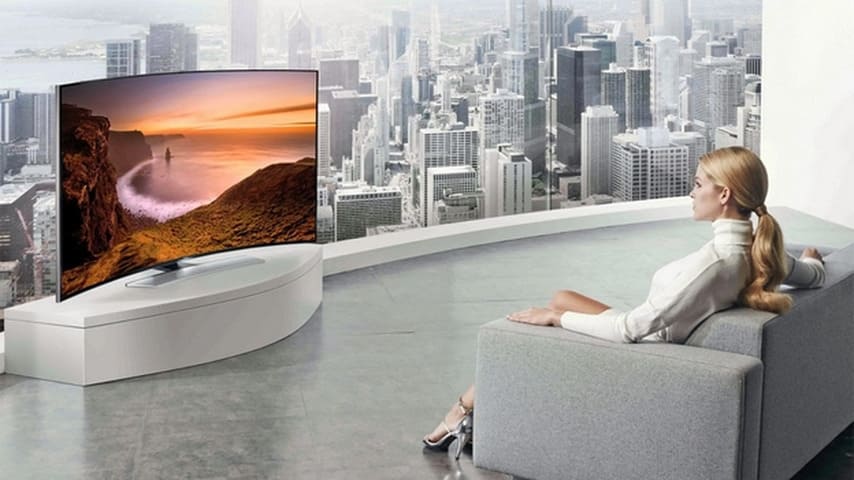
From the time television began to become popular in the 1920s to the present day, screen formats and sizes have evolved tremendously. And with each leap (from tube to flat screens, from HD to 4K/8K), we’ve not only had to adjust our budget, but also the way we watch and the distance at which we stand.
In the era of high definition and ever-larger Smart TVs, choosing the right viewing distance has become key to enjoying a truly comfortable and crisp experience. At Edgar Vasquez Audiovisual Services we check it all the time, especially when we set up screens for events: a couple of meters more or less can make the difference between “it looks brutal” and “you can’t read anything”.
Have you ever wondered what is the ideal distance to sit in front of the TV? In this guide we share practical and easy-to-apply tips to calculate the right distance according to the screen size, optimizing visual comfort, text readability and image impact both at home and in professional environments.
Why is the right TV viewing distance important?
Before we dive into the ideal viewing distance, it is critical to understand why this question is relevant. Choosing the right distance has a significant impact on picture quality and visual comfort. If you are too close, you may experience eye fatigue and difficulty focusing. On the other hand, if you are too far away, you may miss essential details and immersion in the content is impaired.
Factors to consider when determining the correct distance
Screen size:
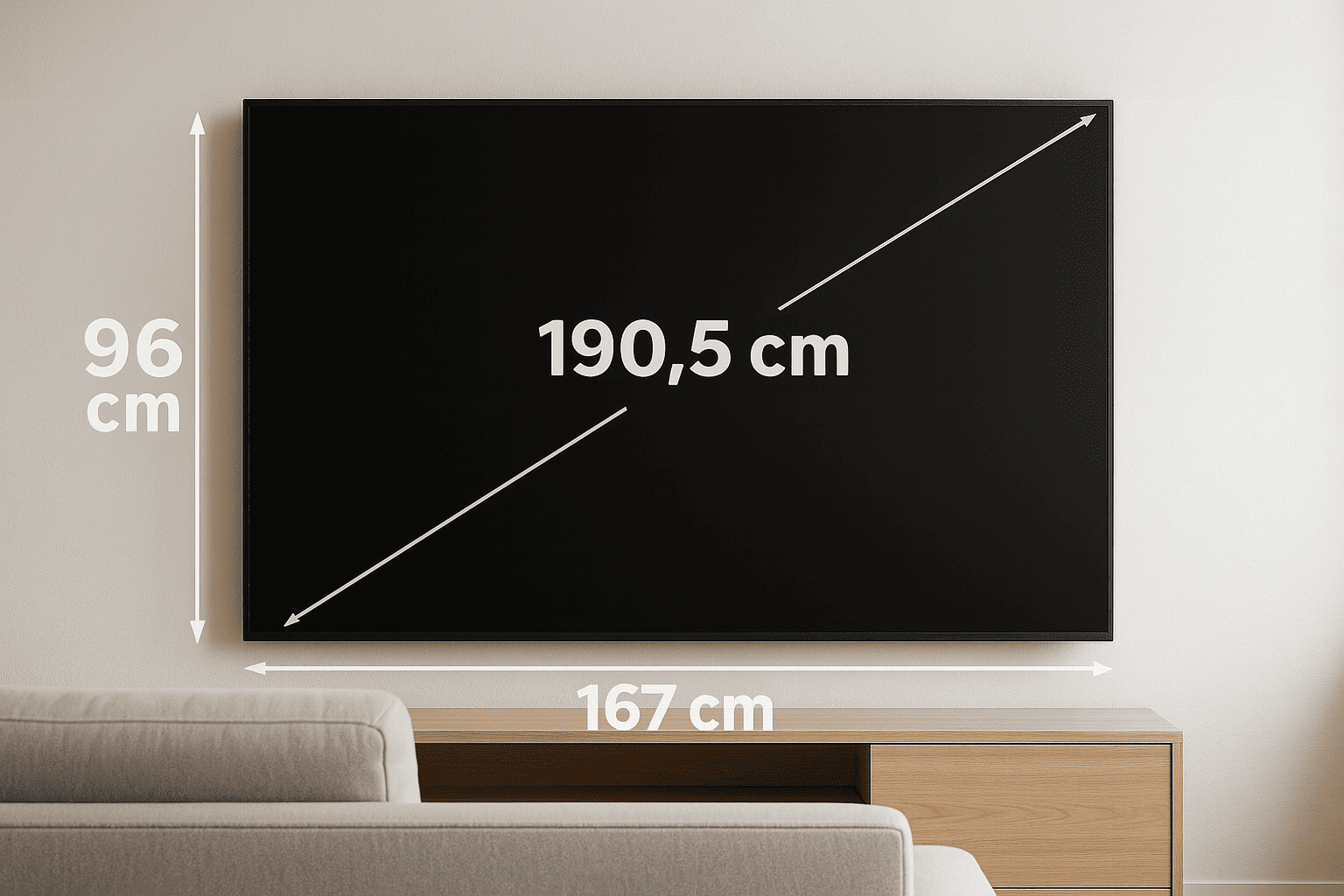
A key factor in calculating the optimum distance is the screen size. As a rule of thumb, it is suggested to multiply the screen size by a factor between 1.5 and 2.5 to obtain the recommended distance.
Screen resolution:
The screen resolution also influences the viewing distance. With high-definition (HD) and 4K displays, it is possible to get closer without losing quality. The sharpness of the image will allow for a more immersive experience without compromising visual health.
Field of view:
Another important aspect is the field of vision: the idea is that you can appreciate the entire screen without straining your eyes, without moving your eyes too much and, above all, without having to turn your head constantly to “follow” what is happening.
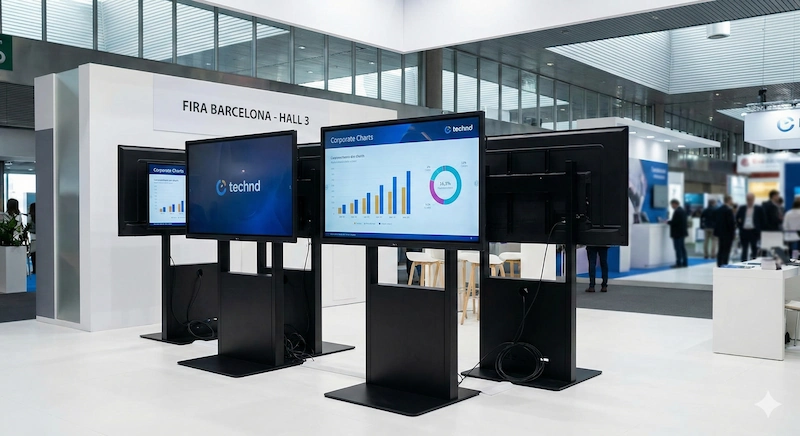
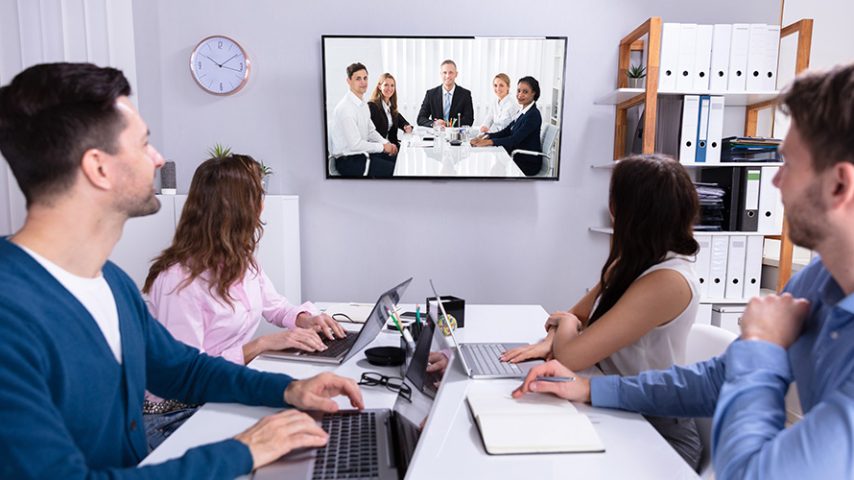
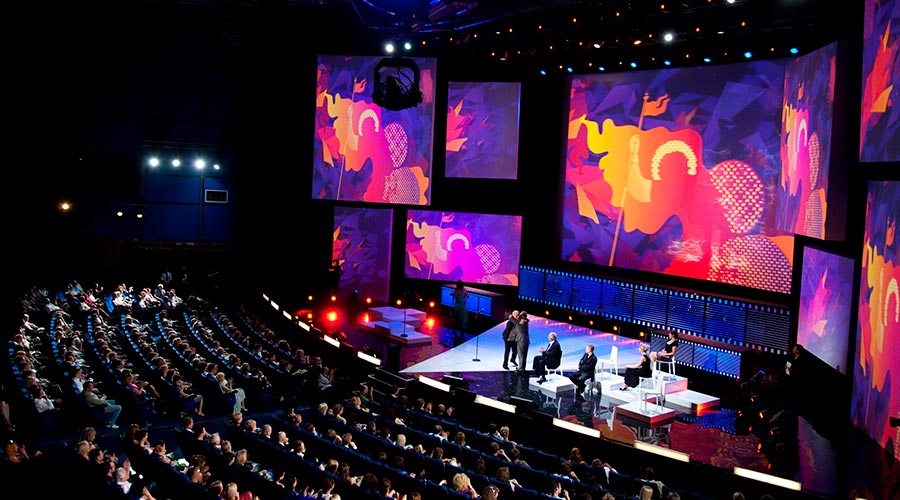
This becomes even more relevant in large rooms, lectures and presentations, where the audience is at different distances and angles. In such cases, solutions such as large TV rentals for conferences help keep content within a comfortable field of view for the majority of attendees, improving comprehension and attention throughout the session.
Tips for finding the optimum distance
Diagonal method:
A common way to determine the ideal distance is the “Diagonal Method”. Divide the screen size in inches by 0.84 to get the suggested distance in inches. Then convert that value to feet or meters.
Angle of View Method:
This method is based on the optimal viewing angle, which is between 30 and 40 degrees. Measure the distance from your eyes to the screen and, using simple trigonometry, adjust your position if necessary.
Tips for an optimal viewing experience
Eye level:
Keep your eye level at the level of the upper third of the screen to avoid eyestrain and improve posture.
Lighting:
Controls room lighting to reduce screen reflections and improve contrast.
Location of the TV set:
Place the TV set at the right height and in a place where there are no obstacles to interfere with viewing.
Tips on how to achieve the ideal TV viewing distance:
Room size and viewing angle
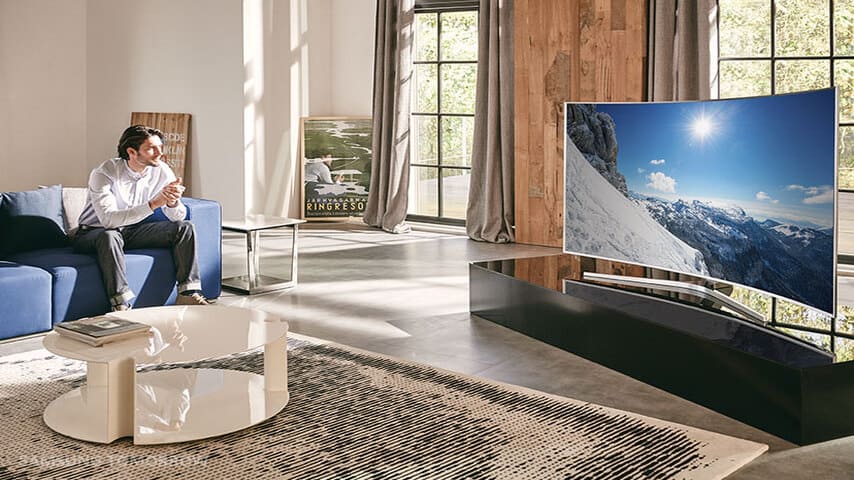
The size of the room in which you place your TV also influences the optimal viewing distance. If you have a small room, you may not be able to apply the same distance rules as in a larger space. In this case, you could opt for a smaller TV to ensure adequate distance.
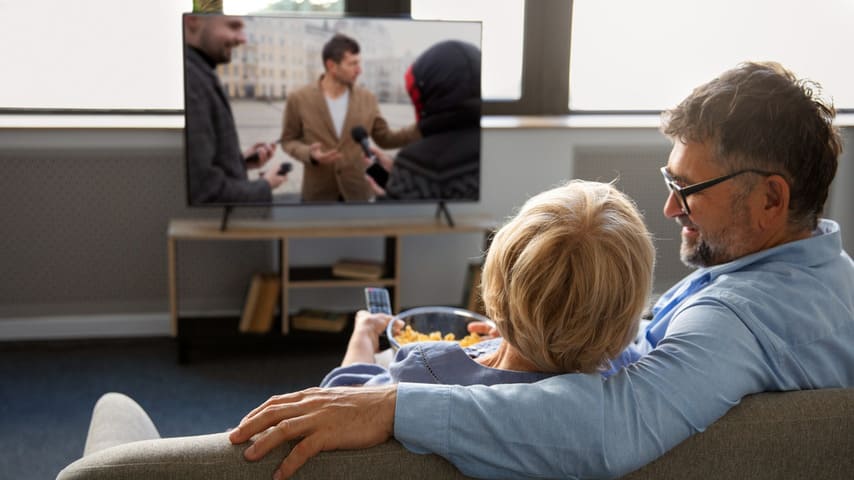
Also, consider the viewing angle from where you usually sit to the screen. If you are positioned at one end of the TV, you will need to adjust the distance to maintain the ideal field of view. The goal is to ensure that the entire screen is within your field of vision without having to constantly turn your head.
Image enhancement technologies and viewing distance
Today, many TVs are equipped with picture enhancement technologies that can affect the optimal viewing distance. For example, some TVs feature OLED technology that offers wider viewing angles and more accurate colors, which can allow you to sit closer to the screen without compromising picture quality.
In addition, certain TV models include a “Motion Smoothing” or “TruMotion” feature, which smoothes motion in fast-action scenes. If you use these features, be aware that they may reduce picture sharpness if you sit too close.
Distance and eye health
Taking care of the health of our eyes is essential. Choosing the right distance for TV viewing can help prevent long-term vision problems, such as eye fatigue, dryness and headaches. Be sure to take regular breaks during prolonged viewing sessions and blink frequently to keep your eyes hydrated.
Suitable distance for different screen sizes
Here is a quick guide on the optimal distance for different screen sizes:
- 32- to 40-inch screens: Approximately 4 to 6.5 feet (1.2 to 2 meters).
- 42 to 55 inch screens: 6 to 9 feet (1.8 to 2.7 meters).
- 58 to 65 inch screens: 9 to 13 feet (2.7 to 4 meters).
- Screens 70 inches or larger: About 13 feet (4 meters) or more.
These are general guidelines only and may vary depending on your personal preferences and the picture quality of your TV.
In short: What is the right distance to watch TV?
Ultimately, the correct TV viewing distance depends on several factors: screen size, resolution, room dimensions and your visual preferences. By following the tips and methods in the article, you can find the optimal position to enjoy a sharper, more comfortable viewing experience, without eye fatigue and with better detail perception.
Remember that everyone may have a different tolerance, so adjust the distance until you find your “sweet spot”. And if you are applying this to a professional setup (conference, trade show or presentation), at Edgar Vasquez Audiovisual Services we can guide you to choose size, placement and screen height to make it look perfect from the real audience. Happy viewing!